Quotas are Not the Answer

Rich Sharpe posted to his blog on his recent reading of Dr. Deming – The American Who Taught the Japanese About Quality by Rafael Aguayo in Lean Programming and Dr. Deming. And he posted a response he received from Rafael Aguayo with some good points including:

But in your case you have a company that demands quotas or targets. Maybe there is a belief within management that this will help the stock. It will not, but that is a different matter that would require a much lengthier explanation.

But the whole point of this is to bring back intrinsic motivation. People should be coming to work to because they love being there. They love the work, they love the respect and appreciation they get, they love the team environment, they love that the company is looking after them and it is a two way agreement. And in this environment people and teams perform miracles. The quotas and targets become meaningless, which is what they are anyway.

Related: Another Failure Due to QuotasTargets Distort the SystemGoodbye Quarterly TargetsBooks on Deming’s management ideasMaking Changes and Taking Risks

Posted in Books, Deming, Management, Systems thinking | Tagged , , | Comments Off on Quotas are Not the Answer

Management Advice from Warren Buffet

As usual, Warren Buffett’s letter to shareholders is packed with wisdom. He is best know for his investing genius but his writing provides great thoughts for managers also: Berkshire Hathaway 2007 Letter to Shareholders:

We will soon purchase 60% of Marmon and will acquire virtually all of the balance within six years. Our initial outlay will be $4.5 billion, and the price of our later purchases will be based on a formula tied to earnings.

This deal was done in the way Jay would have liked. We arrived at a price using only Marmon’s financial statements, employing no advisors and engaging in no nit-picking. I knew that the business would be exactly as the Pritzkers represented, and they knew that we would close on the dot, however chaotic financial markets might be. During the past year, many large deals have been renegotiated or killed entirely. With the Pritzkers, as with Berkshire, a deal is a deal.

Charlie and I look for companies that have a) a business we understand; b) favorable long-term economics; c) able and trustworthy management; and d) a sensible price tag. We like to buy the whole business or, if management is our partner, at least 80%

A truly great business must have an enduring “moat” that protects excellent returns on invested capital. The dynamics of capitalism guarantee that competitors will repeatedly assault any business “castle” that is earning high returns.

Susan came to Borsheims 25 years ago as a $4-an-hour saleswoman. Though she lacked a managerial background, I did not hesitate to make her CEO in 1994. She’s smart, she loves the business, and she loves her associates. That beats having an MBA degree any time. (An aside: Charlie and I are not big fans of resumes. Instead, we focus on brains, passion and integrity.

I should emphasize that we do not measure the progress of our investments by what their market prices do during any given year. Rather, we evaluate their performance by the two methods we apply to the businesses we own. The first test is improvement in earnings’ with our making due allowance for industry conditions. The second test, more subjective, is whether their “moats” – a metaphor for the superiorities they possess that make life difficult for their competitors – have widened during the year.

You will recall that in our catastrophe insurance business, we are always ready to trade increased volatility in reported earnings in the short run for greater gains in net worth in the long run.

What is no puzzle, however, is why CEOs opt for a high investment assumption: It lets them report higher earnings. And if they are wrong, as I believe they are, the chickens won’t come home to roost until long after they retire.

Related: Buffett’s Letter to Shareholders (from last year)Buffett’s Shareholder Letter (2006)Overview of Warren BuffettAnnual Report by Warren Buffett (2005)Hiring the Right People
Continue reading

Posted in Economics, Investing, Management | Tagged , , | 1 Comment

Stupid Bureaucratic Requirement

Quaker teacher fired for changing loyalty oath

California State University East Bay has fired a math teacher after six weeks on the job because she inserted the word “nonviolently” in her state-required Oath of Allegiance form.

“I don’t think it was fair at all,” said Kearney-Brown. “All they care about is my name on an unaltered loyalty oath. They don’t care if I meant it, and it didn’t seem connected to the spirit of the oath. Nothing else mattered. My teaching didn’t matter. Nothing.”

Modifying the oath “is very clearly not permissible,” the university’s attorney, Eunice Chan, said, citing various laws. “It’s an unfortunate situation. If she’d just signed the oath, the campus would have been more than willing to continue her employment.”

Modifying oaths is open to different legal interpretations. Without commenting on the specific situation, a spokesman for state Attorney General Jerry Brown said that “as a general matter, oaths may be modified to conform with individual values.”

“I honor the Constitution, and I support the Constitution,” she said. “But I want it on record that I defend it nonviolently.”

My take: stupid unthinking government action. First I can’t see what value the signing does at all. But even if you think there is some aim that having everyone sign supports does a Quaker inserting non-violently harm that aim in some way? Is it really unquestioningly doing whatever you are told that is the value that is what is being aimed for? Seems pretty clear to me from even this short article this teacher understands the constitution much better than most people and cares enough to take the values that constitution endorses seriously. While the government looks like they only care about getting their form on file and don’t care at all what the purpose of that form is (the purpose can’t really be just to coerce everyone to sign it, can it?).

To me she is doing a great service to defend that constitution with her actions. Hopefully she can do so and have her job. But standing up for what is right often can leave you worse off personally.

I understand that it is easier to ignore the purpose and just focus on compliance with the rules. But what does it say if your actions show that actually loyalty doesn’t matter and signing something you don’t believe is ok? It just bothers me that this loyalty oath situation puts an emphasis on empty promises above the true intent of the constitution. Devaluing it harms us all in the long term.

Related: The First AmendmentPublic ManagementCustomer Un-focus

Posted in Management, Public Sector | Tagged , | Comments Off on Stupid Bureaucratic Requirement

Lean Manufacturing Saving Jobs Again

Lean manufacturing saving jobs

Keiper Automotive has slashed more than $2 million in costs and saved 100 jobs from layoff — all by reducing waste. Bob Cook, plant manager at the Scanlan Street auto parts manufacturer, hosted a lean manufacturing session at the plant yesterday where 10 manufacturers from different sectors learned first-hand how to cut waste, and what an impact it can have.

“This is not about a reduction in the workforce, it is about reducing waste in the system,” Cook said. “There is a lot to be gained . . . and it is really just common sense.” The lean manufacturing session got its start in November at a mayor’s roundtable on advanced manufacturing. When the issue of cutting waste arose, Cook volunteered to lead a session and the London Economic Development Corp. organized it.

“This information is not proprietary. If these people take it back to their plants and expand on it, we all gain,” Cook said.

A number of great points, including:

Related: Manufacturing JobsLean Thinking MisconceptionLean Manufacturing Resources

Posted in Economics, Lean thinking, Management, Systems thinking, UK | Tagged , , | 1 Comment

Management Improvement Carnival #30

Please submit your favorite management posts to the carnival. Read the previous management carnivals.

Posted in Carnival, Management | Tagged , , , , , , | Comments Off on Management Improvement Carnival #30

Customers Get Dissed and Tell

There are those rare companies where interacting with them is not a dreaded experience: Trader Joe’s, Southwest Airlines, Ritz Carlton, Crutchfield, Cannon, Groovix. There are not many. And even just providing something that just works is seen as a treat. The all too common dis-service, combined with the internet, leads to Consumer Vigilantes:

a growing disconnect between the experience companies promise and customers’ perceptions of what they actually get.

A swell of corporate distrust – exacerbated by high executive pay, accounting lapses, and the offshoring of jobs – has people feeling more at odds with companies than ever before.

Years of dialing the call center for a technician yielded at least eight missed appointments by Comcast, he says, but a post on ComcastMustDie brought a phone call the next morning and, later, a lead technician who showed up on time. Now, Salup says: “Anytime I have a problem, I also post it on the blog.”

Pretty lousy systems thinking (or really failures to think systemically). Pay executives obscenely and cut service until customers literally can’t stand you so much they don’t just want to avoid you they want you out of business.

And then instead of fixing the system, just burn the toast (follow the link for an explanation). Then wait from those that get the burnt toast to tell everyone that you sold them burnt toast. Then, after they do that, go scrape it for them. This is not what Dr. Deming meant when he encouraged companies to eliminate the need to inspect for quality. Of course you know that (you are reading this blog after all). Maybe the business schools decided to cut down Deming’s ideas to just eliminating inspection and a couple other sound bites. And then tell the MBA’s not to bother reading all the rest of that… we have to get on to the cost reduction strategies that will make sure you move into the c-level and get the real money.

Most customers, of course, don’t have the time or energy to go that far in their service insurgencies. They want an apology, a human being who answers the phone, or simply some bottled water after a few hours sitting on the airport tarmac

But some companies just push people so far they have to let people know about how poorly they have been treated. Some past posts highlight the frustrating experiences bloggers, including me, share about how badly we have been treated: Ritz Carlton (good) and Home Depot (bad)Incredibly Bad Customer Service from Discover CardMore Bad Customer Service ExamplesPoor Service, an Industry Standard? (HP)Comcast HD DVR Is Simply, Terribly Awful

Consumerist, is a great site, doing what it can to counter some of the horrible service.

Posted in Customer focus, Deming, Management, Psychology | Tagged , , , , , , , , | 7 Comments

Lean Six Sigma Case Studies

ValuMetrix Services provides some really nice lean six sigma case studies. Simple short but still with enough detail to actually provide some sense of what is going on.

While on the topic of online case studies let me plug the Curious Cat management improvement library. I think it is one of the more valuable resources for management improvement offered on the Curious Cat sites. Library shelves: health care articles, lean manufacturing articles, six sigma articles, newly added articles

via: Daily Kaizen

Related: Curious Cat Management SearchManagement Consulting, what does the web site show?Lean Management Case Study

Posted in curiouscat.com, Health care, Lean thinking, Management, Quality tools, Toyota Production System (TPS) | Tagged , , , | 1 Comment

Corporations Do Not Exist Solely to Maximize the Bottom Line

Do corporations exist solely to maximize their bottom lines? We don’t think so., Forbes Magazine:

When Bill Gates suggested recently that corporations should sacrifice profits to the public welfare, practicing what he called “creative capitalism,” he wasn’t the first robber baron with the idea. Henry Ford made a similar proposal in 1916, but he was defeated in court by shareholders who preferred he simply issue dividends. The countervailing view, famously expounded by Milton Friedman, is that the only responsibility of business is to increase profits.

Customers are also demanding products that show a commitment to the public welfare. About 10% of new product introductions are environmentally sensitive–green lightbulbs and cars, for example.

Starbucks pays Ethiopian coffee farmers a 75% premium over market prices, believing this is better than passing out the equivalent in welfare. Pfizer is spending $570 million to develop and deliver treatment in the Third World for fungal infections caused by AIDS. This outlay won’t be recovered in product sales.

They don’t mention the importance of other stakeholder (employees, customers, suppliers – other than the Starbucks example) but still it is nice to read some support for the principles Deming supported: the corporation seeking to benefit all stakeholders.

Related: Curious Cat management search engineDeming on ManagementFocus on Customers and Employees

Posted in Deming, Economics, Management, Toyota Production System (TPS) | Tagged , , , , , | 3 Comments

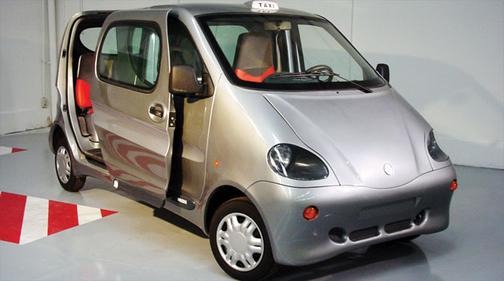
Car Powered Using Compressed Air

car powered using compressed air

Jules Verne predicted cars would run on air. The Air Car is making that a reality. The car would be powered by compressed air. Certainly seem like an interesting idea. Air car ready for production:

Refueling is simple and will only take a few minutes. That is, if you live nearby a gas station with custom air compressor units. The cost of a fill up is approximately $2.00. If a driver doesn’t have access to a compressor station, they will be able to plug into the electrical grid and use the car’s built-in compressor to refill the tank in about 4 hours.

The car is said to have a driving range of 125 miles so by my calculation it would cost about 1.6 cents per mile. A car that gets 31 mpg would use 4 gallons to go 124 miles. At $3 a gallon for gas, the cost is $12 for fuel or about 9.7 cents per mile. I didn’t notice anything about maintenance costs. I don’t see any reason why the Air Car would cost more to maintain than a normal car. Five-seat concept car runs on air

An engineer has promised that within a year he will start selling a car that runs on compressed air, producing no emissions at all in town.

Tata is the only big firm he’ll license to sell the car – and they are limited to India. For the rest of the world he hopes to persuade hundreds of investors to set up their own factories, making the car from 80% locally-sourced materials.

“Imagine we will be able to save all those components traveling the world and all those transporters.” He wants each local factory to sell its own cars to cut out the middle man and he aims for 1% of global sales – about 680,000 per year. Terry Spall from the Institution of Mechanical Engineers says: “I really hope he succeeds. It is a really brave experiment in producing a sustainable car.”

Now does that sound like the Toyota Production System to you? It should. If I were an executive at Toyota I would sure examine this to see if it really is as promising as it looks. And if it is Toyota sure has plenty of cash and the management practice to make a very compelling case for allowing Toyota to produce this globally. The engineers desires closely match what Toyota has learned. Both seek to eliminate the waste of transportation (friction).

Related: Click Fraud = Friction for GoogleManufacturing Takes off in IndiaElectric Automobiles

Posted in Fun, India, Innovation, Lean thinking, Management, Science, Toyota Production System (TPS) | Tagged , , , , , , , , , , , | 11 Comments

Toyota Presses On

At Toyota, a Global Giant Reaches for Agility

With plants in 27 countries, more new factories under construction and workers speaking languages that include Russian and Turkish, Toyota’s top executives are trying a difficult balancing act – replicating the company’s success and operating principles in other countries while ceding more control to these new outposts at the same time.

Next year, it expects to sell more than 10.4 million cars worldwide, double what it sold in 2000.

At Motomachi, more than 3,000 tasks on the assembly line have been translated into video manuals that are displayed on laptop computers above 30 simulated workstations, situated where their functions would be carried out inside the factory.

The videos show everything from the correct way to hold a screw to the best way to hold an air gun so that a worker’s hand will not tire in a few hours. This month, workers from Toyota’s plant in Thailand took part in training required for jobs in their plant’s paint shop. Listening as an interpreter translated from Japanese into Thai, the workers were shown how to bend their knees and spray a water gun across a clear panel of Plexiglas.

Yet another article on the management of Toyota. And here is another: Toyota heir slowly following in family footsteps. And another: Toyota explores more efficient methods to build cars.

Related: 12 Stocks for 10 Years Feb 2008 UpdateNo Excessive Senior Executive Pay at ToyotaNew Articles on Toyota ManagementToyota’s Effort to Stay ToyotaMore Positive Press for Toyota ManagementToyota in the US Economy

Posted in Lean thinking, Management, Management Articles, Toyota Production System (TPS) | Tagged , , , , , | Comments Off on Toyota Presses On