Capital Crescent Trail Photos

I have posted some photos from my walk last year on the Capital Crescent Trail in Washington DC.

3 Vultures on the Potomac River photo of Blue Flower

The Capital Crescent Trail goes along the Potomac River in Washington DC (on the C&O towpath). I hiked first along the Arlington, Virginia side of the Potomac (starting at the north end of the Teddy Roosevelt Island Parking lot) then crossing over at Chain Bridge and heading back down the Capital Crescent trail and over the Key Bridge to and making a loop hike out of it.

More photos: Egypt Photo EssayBoston (Museum of Fine Arts, Science Museum, Boston Commons…)Glacier National ParkGreat Falls National ParkOlympic National Park Photos

Posted in curiouscat.com, Travel photos | Tagged , | 2 Comments

The Power of a Checklist

Great article on The Checklist – If something so simple can transform intensive care, what else can it do? by Atul Gawande

A decade ago, Israeli scientists published a study in which engineers observed patient care in I.C.U.s for twenty-four-hour stretches. They found that the average patient required a hundred and seventy-eight individual actions per day, ranging from administering a drug to suctioning the lungs, and every one of them posed risks. Remarkably, the nurses and doctors were observed to make an error in just one per cent of these actions—but that still amounted to an average of two errors a day with every patient.

In the early years of flight, getting an aircraft into the air might have been nerve-racking, but it was hardly complex. Using a checklist for takeoff would no more have occurred to a pilot than to a driver backing a car out of the garage. But this new plane was too complicated to be left to the memory of any pilot, however expert. With the checklist in hand, the pilots went on to fly the Model 299 a total of 1.8 million miles without one accident.

Yet it’s far from obvious that something as simple as a checklist could be of much help in medical care. Sick people are phenomenally more various than airplanes. A study of forty-one thousand trauma patients—just trauma patients—found that they had 1,224 different injury-related diagnoses in 32,261 unique combinations for teams to attend to. That’s like having 32,261 kinds of airplane to land. Mapping out the proper steps for each is not possible, and physicians have been skeptical that a piece of paper with a bunch of little boxes would improve matters much. In 2001, though, a critical-care specialist at Johns Hopkins Hospital named Peter Pronovost decided to give it a try.

Pronovost and his colleagues monitored what happened for a year afterward. The results were so dramatic that they weren’t sure whether to believe them: the ten-day line-infection rate went from eleven per cent to zero. So they followed patients for fifteen more months. Only two line infections occurred during the entire period. They calculated that, in this one hospital, the checklist had prevented forty-three infections and eight deaths, and saved two million dollars in costs.

Teams also complained to the hospital officials that the checklist required that patients be fully covered with a sterile drape when lines were being put in, but full-size barrier drapes were often unavailable. So the officials made sure that the drapes were stocked. Then they persuaded Arrow International, one of the largest manufacturers of central lines, to produce a new central-line kit that had both the drape and chlorhexidine in it.

Related: Why Isn’t Work Standard?Visual Work Instructionsposts on quality toolsEuropean Blackout not Human Error-Not

Posted in Health care, Lean thinking, Management, Process improvement, Psychology, Quality tools | Tagged , , , , , | 4 Comments

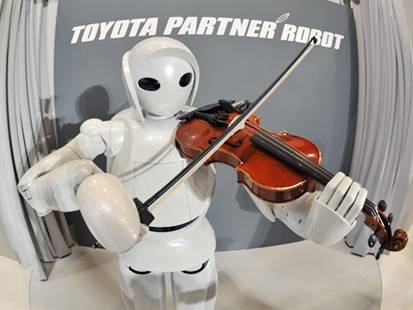
Toyota’s Partner Robot

Toyota partner robot photo

Latest robot in Toyota’s line showcases violin skills [the broken link was removed]

But Toyota’s new robot played a pretty solid “Pomp and Circumstance” on the violin Thursday. The 152-centimetre [about 5 feet] tall white robot used its mechanical fingers to push the strings correctly and bowed with its other arm, coordinating the movements well. Toyota Motor Corp. has already shown robots that roll around to work as guides and have fingers dexterous enough to play the trumpet.

Toyota President Katsuaki Watanabe said robotics will be a core business for the company in coming years. He says Toyota will test out its robots at hospitals, Toyota-related facilities and other places starting next year. He hopes to see partner robots in use by 2010.

“We want to create robots that are useful for people in everyday life,” he told reporters at a Toyota showroom in Tokyo. Watanabe and other Toyota officials said robotics was a natural extension of the automaker’s use of robots in manufacturing, as well as the development of technology for autos related to artificial intelligence, such as sensors and pre-crash safety systems.

As I have mentioned before Toyota continues to invest and plan for the long term. And that future is not limited to automobile manufacture. We posted previously on Toyota’s partner robots. The Curious Cat Engineering Blog Robotics category has a great deal of posts on robots.

On the Toyota web site they list the following areas of [illustrating Toyota’s lack of technology understanding, and sadly that connection to long term thinking, these links are all broken so I removed them – links should live forever] non-automotive Toyota business (I don’t understand why robots are not included here): financial services, new business enterprises, marine and most surprisingly Biotechnology and Afforestation.

Related: Toyota as HomebuilderToyota Engineers a New Plant: the Living KindToyota’s iUnit webcast (personal transport)Toyota’s Early HistoryInterview with Toyota PresidentMore on Non-Auto Toyota12 Stocks for 10 Years Update
Continue reading

Posted in Creativity, Fun, Science, Toyota Production System (TPS) | Tagged , , | 4 Comments

Management Improvement Carnival #24

Please submit your favorite management posts to the carnival. Read the previous management carnivals.

Posted in Carnival, Management | Comments Off on Management Improvement Carnival #24

Lean, Toyota and Deming for Software Development

Mary Poppendieck on The Role of Leadership in Software Development, very nice 90 minute webcast:

In this 90-minute talk from the Agile2007 conference, Lean software thought leader Mary Poppendieck reviewed 20th century management theories, including Toyota and Deming, and went on to talk about “the matrix problem”, alignment, waste cutting, planning and standards. She closed by addressing the role of measurement: “cash flow thinking” over “balance sheet thinking”.

via, Leadership is not Obsolete for Self-Organizing Teams!

Once again Mary provides a great resource. This is a great overview. Lean Software Development by Mary Poppendieck and Tom Poppendieck is an excellent book on these topics.

Related: articles and webcasts by Mary Poppendieckposts on software developmentmore management webcasts

Posted in Deming, IT, Lean thinking, Management, Software Development, Toyota Production System (TPS), webcast | Tagged , , , , , , , | 5 Comments

Getting and Keeping Great Employees

I am not convinced of the premise of The new war for talent: that there will be a great shortage of talent soon. But the article makes some interesting points.

The Conference Board CEO Challenge of 2007 points out that “Cracking the U.S. Top 10 this year is finding qualified managerial talent and top management succession.”

If we neglect to engage our own employees, those who are frustrated can surf hundreds of job boards to see what other opportunities await

A cumbersome and complex ERP system will not suit the masses of young talent joining today’s workforce.

I think the main thing to do is to respect employees (and have that visible in the management decisions made in the organization). Stopping the demotivation would be a big step for many organizations. And to manage your organization with the understanding that the organization’s purpose should be to benefit the various stakeholders (shareholders, customer… and employees).

Related: People are Our Most Important AssetHow to ImproveWhat is Wrong with MBA’ssoul crushing work (comic)

Posted in Management, Performance Appraisal, Respect | 1 Comment

Arbitrary Rules Don’t Work

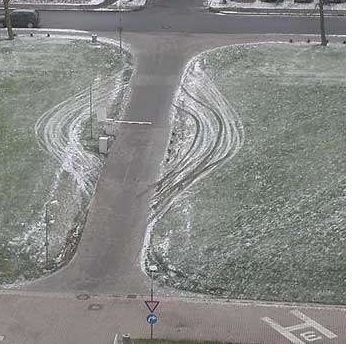
Photo showing evidence of people ignoring gate

Procedurally Enforcing Workflow by Michael Salamon:

UI gem, and a great reminder for the RIAA/MPAA:

You can’t force people to follow directions they deem arbitrary.

I bet if that gate spit out $100 bills people would use it.

Why matters. You can’t just expect people to act in a way that seems arbitrary. As I stated in Poka-Yoke Assembly, Do you Read Instructions Carefully Before Assembly? Nope, I don’t. I expect I can make a quick judgment if I really need to or I basically get it and can put things together well enough. I expect the supplier to make very obvious anything critical. It is not ok to expect people to think the way you want them to. You have to understand how people will react and create solutions based on that.

We have discussed similar ideas: Why Isn’t Work Standard?Visual Work InstructionsVisual Instructions ExampleEuropean Blackout: Human Error-NotFind the Root Cause Instead of the Person to Blame

A similar example I learned long ago. Many schools try to force students not to walk on the lawn and create ugly paths through the grass. A smart alternative. Wait for the students to wear a path. Then pave that. If you are frustrated because people won’t follow your rules your rules are probably bad. Fix the rules (or procedures…). Don’t expect telling people in a loud voice (or stern memo or…) that they must follow your rules.

Posted in Lean thinking, Management, Popular, Process improvement, Psychology, Respect | Tagged , , | 1 Comment

Joy in Work – Software Development

The wonderful cartoon in this link illustrates the all too common despair in work. Software programmers are more likely to really enjoy what they do. There are many reasons for this not the least of which is that they have a fair amount of control over their careers. If they don’t like what they are asked to do, the tools they are asked to work with… they will (more than others) leave for another job. Some managers get frustrated that such people are not willing to put up with the normal bother everyone else seems willing to accept (programmers are often “unreasonable”). But I see an occupation that is more focused on joy in work than most. And creating joy in work is what managers should be worrying about – not getting troublemakers to fall into line.

Why I Program In Ruby (And Maybe Why You Shouldn’t):

Harmony and balance make you feel good. American Rubyists frequently take up all the points of Ruby’s power, expressiveness, and efficiency, but they don’t seem to register the point that Ruby was designed to make you feel good. Even Rubyists who want to explain why Ruby makes them feel good often fail to mention that it was expressly designed for that exact purpose.

Don’t program in Ruby because you want power or efficiency. Don’t program in Ruby because you think you “should”, either. Program in Ruby because you like it. And if you don’t like it, don’t program in it.

I enjoy programming using Ruby on Rails.

Related: Hiring Software Developersposts on improving software developmentDon’t ask employees to be passionate about the company!A Career in Computer ProgrammingIT Operations as a Competitive AdvantageReddit, a living example of how software coders thinkFocus on Customers and EmployeesSigns You Have a Great Job… or Not

Posted in Deming, IT, Management, Psychology, Software Development | Tagged , , , , , | 11 Comments

Toyota’s Effort to Stay Toyota

Toyota’s All-Out Drive To Stay Toyota

“We are making every effort not to lose our DNA,” says Shigeru Hayakawa, president of Toyota Motor North America.

Just in case St. Angelo forgets any of his Toyota training, he has someone watching his back. His retired predecessor, Gary Convis, still gets paid to advise him. That’s an idea Toyota imported from Japan, where the company asks retiring engineers to stick around to mentor young employees. The ranks of these old-timers are growing rapidly as the company tries to safeguard its culture. Last year, Toyota rehired 650 of the 1,200 skilled workers eligible for retirement in Japan, and will soon have 3,000 of these folks on its payroll.

Related: lean manufacturing portalToyota management postsToyota IT OverviewNew Toyota CEO’s Views

Posted in Lean thinking, Management, Management Articles, Toyota Production System (TPS) | 1 Comment

Insights from Jim Womack

Jim Womack provides great insights in a recent interview, Thought Leaders — Lean On Me:

All the Japanese car companies did the quality thing based on the Deming Prize criteria and so forth back in the 1960s and 70s. What that meant was, they tried to get from end-of-the-line inspection to inspection at the source. And they did a pretty good job on that, no question about it.

Toyota has a supplier management system that is still the best-in-class, and a good part of Toyota’s recent quality issue has been bringing in a whole bunch of non-Toyota traditional suppliers and trying to teach them the Toyota Management System, and they’re struggling because it turns out — and I should know this better than anybody, it’s what I’ve been doing for the last 20 years — it’s hard to get people to change old ways of thinking.

We’ve got now a nation full of kaizen consultants doing kaizen, and almost all of that kaizen would be unnecessary if the production process had been laid out the right way the first time, which is what Toyota does.

What we see is a lot of partially lean businesses but not much to show in the way of totally lean businesses, and I would say that Danaher probably comes the closest. So the prize is still out there to be gotten by somebody, and of course Toyota as they try to continue this breakneck ramp-up, which in some ways is not all that different from Boeing in 1998, except the problem here is the constraint is not suppliers but management. Can Toyota train enough young managers to understand its management methods to keep managing the way it’s managed that’s put it on top?

Most managers think that their greatest contribution to the business is doing workarounds on broken processes rather than doing the hard work to get the process right so it never breaks down so you don’t need to do workarounds.

Other posts discussing some of these ideas, and more: Management ImprovementFrom Lean Tools to Lean ManagementArticles by James WomackTransforming With LeanDeming’s thoughts on Management by John HunterDanaher Expands Lean Thinking One Acquisition at a Timeposts mentioning WomackNo More Lean ExcusesBetter and DifferentManagement Training Program

Posted in Lean thinking, Management | Comments Off on Insights from Jim Womack