
Wisconsin Manufacturing

Editorial: A way forward for state companies [the broken link was removed], Milwaukee Journal Sentinel

The idea of lean manufacturing is pretty close to a religion at Ariens these days. The tenets: Be quick on the draw. Improve continuously. Be open to change. Get everyone – shop floor to board room – involved. The company’s output has nearly tripled in six years with a work force that has remained steady at about 1,000. Productivity is up, on average, about 17% a year, Ariens says.

Manufacturing and related industries are still a huge piece of Wisconsin’s economy – nearly half by some estimates.

The state should boost funding for the Wisconsin Manufacturing Extension Partnership, which preaches the gospel of lean manufacturing. Statewide, companies helped by the partnership reported $233 million in improvements during fiscal 2006. The non-profit group offers low-cost consulting to small- to mid-sized companies and receives both state and federal funding.

It’s a sign that Wisconsin manufacturers can play a major role in the state for years to come. And lean manufacturing is a key to that.

Wisconsin continues to succeed as an example of manufacturing success. Continue reading
Posted in Economics, Lean thinking, Management, Public Sector | Tagged , | 6 Comments

Intellectual Property Rights and Innovation

How intellectual property influences innovation and growth in the economy depends on the application of intellectual property law. No intellectual property (IP) rights would hinder innovation. Complicated application of confusing and overreaching IP rights also hinders innovation. Now I see the USA systems as having overreaching claims of IP rights, IP rights granted for obvious ideas which then are used to extort those actually producing value and overall a system much in need of improvement.

Lawrence Lessig does the best job of presenting the value of improving our application of IP law.

Related: The Patent System Needs to be Significantly ImprovedPatent Review Innovation – Is the US Patent System Endangering American Innovation? [the broken link was removed] – Do Intellectual Property Rights Help or Hinder Innovation? [the broken link was removed] by Amy Rowell

Posted in Economics, Innovation | Tagged , , , | 2 Comments

Cyberpunk Manufacturing

Raising the Floor by Alex Soojung-Kim Pang:

The transformation of the factory from a vast machine into a creative, knowledge-intensive space is a development few could have seen. Are you ready for the next industrial revolution?

So what will the factory of the future be like? It will be aware of how users are reacting to both its latest products and still-under-NDA prototypes, feeding off streams of information coming in from prototypes, recycled units, market-watching software agents, and blogs and discussion boards. It will be able to shift production lines in a matter of days or hours, and will constantly incorporate the latest insights from the lab and the natural world. The combined effects of cascades of information and pressure for constant innovation will turn the factory floor from a space populated only by machine-tenders, into a space in which production and innovation happen simultaneously.

Sounds like lean manufacturing. The author mentioned six sigma and TQM but not lean. The article is a bit over the top, but does illustrate how cultural trends add to the benefits of a lean future.

Defined: NDA – non disclosure agreement. More management definitions.

Posted in Management, Manufacturing | Comments Off on Cyberpunk Manufacturing

Health Care: Saving Lives

We wrote about the IHI campaign to save lives through improved health care management previously – Saving Lives: US Health Care Improvement. IHI estimates 122,300 from December 2004 to June 2006. The PBS Newshour aired a report on the campaignhttps://management.curiouscatblog.net/2006/08/25/health-care-saving-lives/.

Related: posts on Health Care Improvementarticles on improving healthcare

Posted in Health care, Management | 1 Comment

Making Changes and Taking Risks

Sales Force by Curtis Hartman, 1996 explores Ron Rodin’s use of Deming’s ideas at Marshall Industries. Ron Rodin’s book, Free Perfect and Now, is excellent.

The system had to change. “We eliminated commissions, incentives, promotions, contests, P&Ls, forecasts, budgets, the entire functional organization chart,” Rodin says. It was a radical move. Contests and commissions — internal competition — were a way of life in the industry, the universal motivational tool. Rodin was hammered when he unveiled the plan in an open letter to the industry. One competitor accused him “of kissing Deming’s ring.” Another called the system “communistic.” Electronic Buyers News, the industry bible, published a biting editorial.

Yes the article is 10 years old by as I have stated numerous times I don’t believe only things written in the last week have value. Going back to the great stuff (even if you have read it before) is often much better than reading whatever is new.

Posted in Deming, IT, Management, Management Articles | Tagged , , , | 4 Comments

Internet Access at Work

Providing internet access at work can create some management issues. However, the correct solution to those problems is not to be overly restrictive on access to the internet.

Obviously, the most important thing is doing the work of the organization: there is no excuse for employees ignoring customers or pressing needs to IM with their friends or browse the web. However, if you hire responsible people and manage properly – maintaining a proper work culture, etc., you should respect and trust your employees.

Internet access does create the potential for abuse. And I think it may well require more management involvement to assure it is not abused (because the temptation is so great) but much of that management involvement is probably a good thing. Management, in general, is too far removed from what is actually going on (see Dilbert’s pointy haired boss).
Continue reading

Posted in IT, Management, Respect | Tagged , , , , , | 1 Comment

Toyota Land

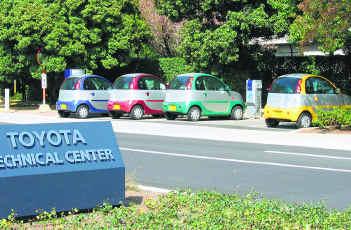
Toyota electric cars in Toyota City

A visit to Toyota City: In Toyota land [the broken link was removed] by Vinod Jacob:

When I was a little boy it was fascinating to read about Toyota’s vision for non-polluting vehicles to replace existing versions. I used to marvel at the sketches of the futuristic small vehicles plying inside the Toyota campus. A visit to the Toyota headquarters proved this to be a reality. Just outside the Toyota technical centre are the E-com vehicles put on a charger.

Visitors are welcomed by robots playing the clarinet.

The `Toyota way’ is explained through audio-video shows that cover concepts such as JIT (just-in-time manufacturing system), Kanban cards, andon cords, synchronising dolly for instruments, and raku-raku flexible seats.

Another article by Vinod Jacob – Ford centenary: A legacy revisited

Posted in Management, Toyota Production System (TPS) | Tagged | Comments Off on Toyota Land

Danaher Practicing Lean Thinking

Manufacturer’s Acquisition Strategy Sets It Apart From The Pack [the broken link was removed], Investors Business Daily:

“It’s adapted from the Japanese Kaizen system,” Holmstead said. “Kaizen is a way of removing waste and standardizing processes and bringing underperforming or slow-growth companies with maybe single-digit margins up to midteen margins.”

The keys are standardization, measurement and innovation — all directed toward the goal of continuous improvement.

“It’s basically a set of tools that allows Danaher to make whatever widget they are manufacturing at a cost less than most of their competitors,” said Morningstar analyst Eric Landry. “Over the past decade they have (also been moving) DBS into the back office and into sales. It produces a culture where you are never satisfied.”

The quotes are from Wall Street Analysts. I think basically they like the ever increasing cash flow and then use the story the company gives for why they are successful. Still they are playing up lean thinking.

See my comments on: Wall St. Doesn’t Respect GE’s Processes

via: The Kaizen Turnaround Kings at Danaher [the broken link was removed]

Related:

Posted in Investing, Lean thinking, Management, Management Articles, Manufacturing | Tagged , , | 1 Comment

Gladwell (and Drucker) on Pensions

The Risk Poolhttps://management.curiouscatblog.net/2006/08/21/gladwell-and-drucker-on-pensions/ by Malcolm Gladwell (author of The Tipping Point and Blink):

The most influential management theorist of the twentieth century was Peter Drucker, who, in 1950, wrote an extraordinarily prescient article for Harper’s entitled “The Mirage of Pensions.” It ought to be reprinted for every steelworker, airline mechanic, and autoworker who is worried about his retirement. Drucker simply couldn’t see how the pension plans on the table at companies like G.M. could ever work. “For such a plan to give real security, the financial strength of the company and its economic success must be reasonably secure for the next forty years,” Drucker wrote. “But is there any one company or any one industry whose future can be predicted with certainty for even ten years ahead?” He concluded, “The recent pension plans thus offer no more security against the big bad wolf of old age than the little piggy’s house of straw.”

Pension plans did work well for a short period of time. But recently they (along with the attached retiree health care) are one of the big problems facing large old companies: like GM. Gladwell talks about the dependency ratio for an economy and the dependency ratio of companies. Worsening dependency ratios can cause pension plans to kill companies (if they are not funded when the obligation is incurred) – as the company is forced to pay for more and more retirees with fewer and fewer workers.
Continue reading

Posted in Books, Economics, Health care, Investing, Management, Popular, Systems thinking | Tagged , , , , , , | 1 Comment

Toyota’s New Texas Plant

Toyota exec stands up to Texas heat [the broken link was removed] by Cheryl Hall:

Toyota’s new Texas plant is coming on line and will further increase Toyota’s contribution to the US economy, by buying from local suppliers and most importantly by working with local suppliers:

And he’s well-acquainted with those 21 on-site suppliers, which Toyota refers to as equal partners and a vital component in this ahead-of-the-industry endeavor.

Each of the 200,000 trucks produced annually will have up to 30,000 parts that are mostly made in surrounding buildings. Without on-site production, parts would travel up to 2,000 miles to San Antonio. A lot of things can happen to them during such a long haul. And those 18-wheelers produce emissions by the cloud-load – a key concern for Toyota, says Mr. Tajima.

“We really believe that the true meaning for our company’s existence is better quality, better performance, better reliability and being kinder to Earth, which means fuel efficiency and lower pollution, not only with the product but in the process of making it,” he says. “Otherwise, we’re just like everyone else.”

Previous post on Toyota’s supplier development. The article includes some interesting information on how Toyota has been hiring, they:
Continue reading

Posted in Management, Manufacturing, Respect, Toyota Production System (TPS) | Comments Off on Toyota’s New Texas Plant