
Focus on Customers and Employees

As I have stated I believe it is the purpose of organization to serve many stakeholders (customer, employees, stockholders, community…). Thankfully some companies agree: Compensation at Whole FoodsStarbucks: Respect for WorkersGoogle: Ten Golden RulesAmazon Innovation. Here is another example – How Costco Became the Anti-Wal-Mart:

But the Pièce De Résistance, the item he most wanted to crow about, was Costco’s private-label pinpoint cotton dress shirts. “Look, these are just $12.99,” he said, while lifting a crisp blue button-down. “At Nordstrom or Macy’s, this is a $45, $50 shirt.” Combining high quality with stunningly low prices, the shirts appeal to upscale customers

Costco’s average pay, for example, is $17 an hour, 42 percent higher than its fiercest rival, Sam’s Club. And Costco’s health plan makes those at many other retailers look Scroogish. One analyst, Bill Dreher of Deutsche Bank, complained last year that at Costco “it’s better to be an employee or a customer than a shareholder.”

I am happy to invest in companies where all stakeholders are winning – I think that is a great long term strategy. Especially since so often, so many of the rewards seem to, inappropriately, go to the senior executives and everyone else [the employees seem to get the most abused but that is just my wild guess] including the owners share what is left over). I don’t own Costco, though: I prefer Tesco. I also don’t mind owning companies for a decade or more – unlike many “owners” which contributes to supporting such a long term strategy.
Continue reading

Posted in Customer focus, Management, Respect, Systems thinking | Tagged , , , , , | 4 Comments

Process Improvement and Innovation

Every so often an article appears discussing the need to change focus from process improvement to innovation (and recently they are followed with quite a bit of blog talk). I disagree on several grounds. First you have needed to focus on both all the time. Second, it is not an either or choice. Third, the process of innovation should be improved.

I do not believe process improvement is bad for innovation. Bad process changes can be bad for innovation. But if we are looking at a research and development organization where the output is new products then process improvement would be focused on improving the processes to make that happen. The type of process improvement would be different than those made to manufacturing a product better.

Some six sigma efforts are little more than cost cutting efforts. And those efforts might claim a “process improvement” that is really just cutting costs in R&D. But we should not confuse bad management with the good practice of process improvement. Yes, cutting costs for the sake of cutting costs often leads to problems. Waste should be eliminated (which can reduces cost). Focus on eliminating waste. Eliminating waste in innovation activities is no worse than eliminating it anywhere. It might be more difficult to determine what is waste (that is where management skill and knowledge come into play) but the idea that process improvement (including eliminating waste is bad for innovation is something that should be rejected). And process improvement in innovation should not be limited to eliminating waste.

A good example of process improvement in innovation activities: Fast Cycle Change in Knowledge-Based Organizations (pdf format) by Ian Hau and Ford Calhoun, published by the Center for Quality and Productivity Improvement, University of Wisconsin – Madison.

Related: Better and DifferentNew Rules for Management? No!Quality and Innovation“New” Management NeedsManagement Advice Failures

Posted in Creativity, Deming, Innovation, Management, Process improvement, Psychology, Quality tools, quote, Systems thinking | Tagged , , , , , , | 5 Comments

Visual Instructions Example

Visual Instructions

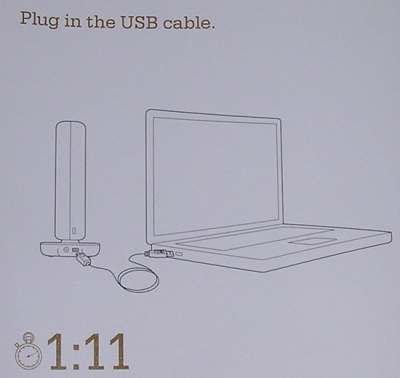
How to get people to actually use instructions for using your product: make it easy to do so. This blog post illustrates a well designed instruction guide for the Seagate FreeAgent backup drive. Simple pictures make it very obvious what to do (and even includes a time stamp showing how long into the process you are – which shows you the total time it will take at one simple glance 1 minute and 36 seconds).

Such instructions are a great example to guide internal standard work instructions.

Related: Why Isn’t Work Standard?How to Create Visual Work Instructionsblog posts on quality toolsmanagement improvement glossary

Posted in Management, Quality tools | Tagged , , , , | 4 Comments

Failure to Address Systemic SWAT Raid Failures

The systemic failure of police raids continues to cause deaths of innocent people. In congressional testimony last month Radley Balko presented more evidence in: Our Militarized Police Departments:

Pay particular attention to the red markers on the map. Those are the approximately 40 cases where a mistaken raid resulted in the death of a completely innocent American citizen. The most recent example of course is the drug raid in Atlanta last fall that killed 92-year old Kathryn Johnston. Ms. Johnston mistook the raiding police officers for criminal intruders. When she met them with a gun, they opened fire and killed her. The police were acting on an uncorroborated tip from a convicted felon.

I’d estimate I find news reports of mistaken raids on Americans homes about once a week. If you’re wondering, yes, there was one just this week. This past Saturday, in Durango, Colorado, police raided the home of 77-year-old Virginia Herrick. Ms. Herrick, who takes oxygen, was forced to the ground and handcuffed at gunpoint while officers ravaged through her home.

They had the wrong address. In just the last month, there have been mistaken raids in New York City; Annapolis, Maryland; Hendersonville, North Carolina; Bonner County, Idaho; and Stockton, California. In each case, innocent American citizens had the sanctity of their homes invaded by agents of the government behaving more like soldiers at war than peace officers upholding and protecting our constitutional rights.

800 times per week in this country, a SWAT team breaks open an American’s door, and invades his home. Few turn up any weapons at all, much less high-power weapons. Less than half end with felony charges for the suspects. And only a small percentage end up doing significant time in prison.

It is a shame that the evidence of systemic failure is ignored and business as usual continues (when that business as usual is so extreme). It sure seems to me this situation calls for intervention and a replacement of current methods of business with much improved management practices. Talk about lack of respect for people – those with homes being invaded and even killed due to systemic failure of police raids. There is a need to fix this system – not just making excuses every time yet another mistake is made. The mistakes are not special causes unique to the individual case but the common cause errors resulting from the current management practices.

Posted in Management, Public Sector, Respect | 3 Comments

Advertise on the Curious Cat Management Improvement Blog

We are adding the option to place direct ads on the Curious Cat Management Improvement Blog. If you would like to place text ads – or small image ads – related to management topics please contact us.

For more information see: placing an ad on the Curious Cat Management Improvement Blog.

Posted in curiouscat.com | Comments Off on Advertise on the Curious Cat Management Improvement Blog

Deming’s 14 Points

The Project Management Student blog has posted point 14 of the series covering Deming’s 14 points for Project Management. I have mentioned it before, and the series is worth reading (in this Deming advocates opinion). A sample, from Enable Pride of Workmanship [the broken link has been removed]:

Project managers should be looking for the great things their teams are doing. People on their projects should know that when they go above and beyond, they will be recognized. A huge part of this is that the PM must be unselfish and there to serve their people. Servant leadership, that is what is required. The PM should start with the viewpoint that the multitude of talent on their team is going to come up with better ideas than the PM can alone, and not be afraid to embrace those ideas.

Related: Deming on ManagementDr. Deming’s 14 obligations of managementblog posts on Deming’s ideasStop Demotivating Employees

Posted in Deming, Management | Comments Off on Deming’s 14 Points

Management Improvement Carnival #14

Management Improvement Carnival #14 is hosted by Kevin Meyer at Evolving Excellence. Some highlights include:

  • Reducing Waste for Shoppers at Lean Blog. “The traditional grocery store is to spread out common items to force you to walk the whole store – that’s waste for the customer. Target is trying a new approach.”
  • 10 Common Misperceptions About Lean Manufacturing at Gemba Panta Rei. “There is nothing inherently Japanese about Lean manufacturing, nor are Japanese people naturally better at Lean than any other people.”
  • Durable and Great at Six Sigma Blogs. “… innovation cannot be pursued in and of itself. Innovation is the complement to operational excellence…”
  • Unanswered Questions at Edge Perspectives. “It’s appropriate to step back occasionally and reflect on what we don’t know, rather than simply sharing what we know.”

Please submit your favorite management posts to the carnival.

Posted in Carnival, Management | Comments Off on Management Improvement Carnival #14

Funding Google Gadget Development

Google Gadgets are small tools and toys that integrate with iGoogle. Google is funding developers to work on creating gadgets through Google Gadget Ventures. Great idea. They offer:

1. Grants of $5,000 to those who’ve built gadgets we’d like to see developed further. You’re eligible to apply for a grant if you’ve developed a gadget that’s in our Google gadgets directory and gets at least 250,000 weekly page views. To apply, you must submit a one-page proposal detailing how you’d use the grant to improve your gadget.
2. Seed investments of $100,000 to developers who’d like to build a business around the Google gadgets platform. Only Google Gadget Venture grant recipients are eligible for this type of funding. Submitting a business plan detailing how you plan to build a viable business around the gadgets platform is a required part of the seed investment application process.

Google continue to make good moves to manage in a new world. With this program they are not investing in creating an infrastructure to develop software, support software, hire staff… Instead they get to tap the drive and capabilities of those developers working on products which increase the value of iGoogle through small cash incentives. Previously they offered Google Gadget Awards. They also fund Google summer code – to support software developers creating open source software and reducing computer waste (where they didn’t stop with improving the servers they use but to making a broader impact on society). They really do a great job of leveraging their efforts well.

Related: Google Innovation and EntrepreneurshipGoogle Custom Management Improvement Search EngineExperiment Quickly and OftenInnovate or Avoid Risk

Posted in Creativity, Fun, Google, Innovation, IT, Management, Software Development | 4 Comments

How to Get Ahead

Deep Thinkers Need Not Apply: How To Get Ahead In the Modern Business World [the broken link has been removed – when will sites be managed with the known wise practices from 1998 (web addresses need to live forever)?]:

Fast forward to my first real job out of college. It didn’t take long for me to realize that management’s perception of who should be promoted was heavily biased by who they liked. There was one engineer in particular who was highly skilled and detail oriented, but was one of the last to be promoted to the next level. Why? Because he was always working instead of schmoozing. As a result, it was thought that he “didn’t have good people skills,” when really, he was an excellent communicator, but simply didn’t waste time with frivolous talk and schmoozing.

This is something to be very careful of when managing people. I find that who says something is usually more important in predicting how people will react than what is said. As I have tested this myself I have learned how biased people are by who is talking; and I have tried to correct the judgments I reach (I know I don’t do it all the time but I try to especially for important things).

Fast forward to today. I sit in meetings with strangers and say things that are deep and insightful (at least, I think they are), but no one pays attention. A friend of mine in the group says “Rob has a popular business blog…” and suddenly I can say nothing wrong. My ideas are the same, but five minutes earlier, no one cared. Now I’m perceived as popular. Now my ideas matter.

I haven’t managed to have that reaction yet 🙁 Ok, maybe I am not suppose to wish that people would use poor reasoning to listen to me but I am in favor of any reason that makes them listen 🙂

Related: Management is PredictionProblems Caused by Performance Appraisalposts related to psychologyCurious Cat Management Improvement Jobs

Posted in Career, Management, Performance Appraisal, Psychology | Tagged , | Comments Off on How to Get Ahead

Lean Health Care Interview

Nice short interview of Professor of Emergency Medicine, Matthew Cooke, on lean health care in the UK (via the lean blog). He mentions that applying lean thinking to health care gets rid of wasted time for patient, eliminates errors (by reducing opportunities for error) and staff spends more of their time on direct patient care.

Related: articles on improving the management of health careGoing Lean in Health CareDocumentary of improving hospitalsSimple Solutions That Worknon-value added steps

Posted in Health care, Management, webcast | Comments Off on Lean Health Care Interview