
Flexibility in Lean Manufacturing

What is Flexibility for Lean Manufacturing? [the broken link was removed] by Jon Miller:

True flexibility should be a measure not of a machining system or an assembly department but of an entire value stream from the end customer through the supply chain and back to the end customer (from request to fulfillment) and this system’s (value stream’s) ability to deliver Every Product Every X with X being months, weeks, days, hours, etc. Planning and building capacity based on forecasts results in false economy of scale thinking, which reinforces customer behavior that volume is cheaper and lead-times are long. Being able to make only what the customer is truly buying right now is a Lean measure of flexibility.
Posted in Lean thinking, Manufacturing | Comments Off on Flexibility in Lean Manufacturing

Deming in the New Economy

I just read an interesting paper (found via – Stating the Obvious [the broken link was removed]): New Economy Concepts and the Application of Deming’s Theories on Management [the broken link was removed] by Christian Buckley and Arthur Close

All measures should supply accurate information usable for making good decisions. To paraphrase Dr. Deming – if you don’t know how to use the answer to improve you process, the calculation(s) were a waste of time.

Great point, see: Measurement and Data Collection.

Innovation rarely comes as the result of an apple falling from a tree and hitting you in the head.
Innovation is more of a process – sometimes simple and buried deep within the psyche of the individual, and sometimes methodically sewn into the practices of a team – that is put in motion by the desire to improve the status quo.

Another good point, which you might think is obvious: Managing Innovation.

Related: Understanding DataInnovation in OrganizationsDeming on Management

Posted in Deming, Management Articles, Software Development | Tagged , , | Comments Off on Deming in the New Economy

Recalls at Toyota and Sony

Recalls by Toyota and Sony shock Japan’s pride [the broken link was removed]: another article discussing the recent recalls at Toyota and Sony.

Some have also begun to blame the decline on recent American-style management changes, like performance-based pay, the end of traditional lifetime job guarantees and increased use of temporary workers in order to cut costs.

I don’t actually think this is right in Toyota’s case anyway; Toyota seems to have resisted adopting poor management practices form the west (an IT example – see the end of the post). They just need to keep trying to do better. It is very easy for management to lose its way, wherever the compnay is located.

For a time, American and European executives flocked here to learn Japanese quality-control concepts like “kaizen,” or improvement.

I like this quote, especially given our post yesterday on Mike Wroblewski’s current visit to Japan to learn about manufacturing management practices. I think there is a great deal for anyone to learn today from such visits. Yes, Toyota needs to do better but that doesn’t mean others don’t have a great deal to learn from them.
Continue reading

Posted in Deming, Management, Performance Appraisal, Toyota Production System (TPS) | Tagged | 2 Comments

Six Sigma in Sales

Can Six Sigma Work in a Sales and Marketing Environment? [the broken link was removed] by Paul Selden:

The more systematic view demystifies sales….
As such, that system can be subjected to objective analysis using tools common to Six Sigma and other well-grounded disciplines.

Sales is often an area that is treated as though it were separate from the company. That leads to all sorts of problems. Sales needs to be seen as part of the system of the organization and managed in that way. Just remember systemic thinking (viewing the entire system) will be needed, not just analysis (viewing the components of a system).

Related: Marketers Are Embracing Statistical Design of ExperimentsAppeal for Marketers to Apply Deming’s IdeasMarketing in a Lean CompanyProblems with BonusesFree, Perfect, and Now (book by Robert Rodin)Design of Experiments explanation

Posted in Management Articles, Six sigma | Tagged | 1 Comment

Japan Kaikaku Experience

Mike Wroblewski is blogging a great series of posts on his Japan Kaikaku Experience, including Toyota Motor Kyushu:

An interesting point is that the assembly line had a goal of only 97% uptime. They did not want 100%. It was believed that a goal of 97% was better (more realistic) and prevented quality problems from being slipped through. If the goal is 100%, the employees would say that something was not really a problem and let it go to keep at a target of 100%. With a target of 97%, the employees would not be pressured to let things go and stop the line to correct the problem!

Interesting stuff. Toyota is much better at using targets than most organizations. Japan Day 2 – Matsumoto Kogyo:
Continue reading

Posted in Lean thinking, Management, Manufacturing, Toyota Production System (TPS) | Tagged , , , | 1 Comment

Lexus: Long Term Thinking

Lexus: A Retrospective [the broken link was removed]

All this involved creating not only the best car ever but also something new, a psychological experience rooted in reality. Toyota wanted to create for the buyers of this new car the best overall ownership experience ever. To establish that ultimate experience, Toyota decided to sell Lexus in a completely separate setting from its main line of vehicles. Lexus was to have its own state-of-the-art dealerships and top-notch dealers who were committed to the philosophy of treating customers as they had never been treated before. This was called the Lexus Covenant, which reads, in part, “Lexus will do it right from the start. Lexus will have the finest dealer network in the industry.

Related: 2005 Baldrige Award (Park Place Lexus)Toyota Production System blog posts

Posted in Toyota Production System (TPS) | Tagged | Comments Off on Lexus: Long Term Thinking

Two more Lean Blog Podcasts

More excellent management podcasts from the Lean Blog: Part 2 of 2 with Dr. Liker, Lean Healthcare and Jamie Flinchbaugh on Muda. As Jamie explains the reason for talking about the seven wastes (muda) is the value added to waste elimination that the distinction provides (by helping people see the issues more clearly). The reason for learning about lean more thoroughly is to more effectively improve.

Related: articles by Jamie Flinchbaughmanagement blog posts on podcastsToyota Targets 50% Reduction in Maintenance Wasteblog posts on healthcare improvement

Posted in Lean thinking, Management, webcast | Comments Off on Two more Lean Blog Podcasts

Going Lean Brings Long-term Payoffs

Going lean brings long-term payoffs [the broken link was removed] by John Torinus:

The growing number of Wisconsin manufacturers, and the few service companies, taking the lean journey are learning that it is not a sprint.

The immediate paybacks come in the form of saved space, less distance traveled, fewer handoffs, faster throughput, lower inventories and man-hours saved.

I would state the authors next point differently. The early successes provide resources to invest in making large more fundamental changes to the organization. Those successes also help convince people these lean ideas have merit. Dilbert does a good job of illustrating how many workers feel about the latest words spoken by their management. Without visible success expecting employees to believe the new management practices is unwise.

While lean aims at productivity improvements, surprising jumps in quality often result as a byproduct.

Lean manufacturing focuses on eliminating waste which given the systemic view of lean thinking leads directly to improved “quality.” Defects are a clear waste and identified as such by Ohno. Thus eliminating waste includes improving quality in many ways: reduced defects, quicker response to the market, reduction in the need to dispose of excess inventory…

Continue reading

Posted in Deming, Lean thinking, Management, Management Articles, Systems thinking | Tagged , , , , , | 2 Comments

New Lean Blog: Lean Insider

A new lean blog, from Productivity Press, starts off with: The Low Rates of Lean Implementation [the broken link was removed]:

In presenting the results during a recent Industry Week Webinar, Jane Biddle, VP of Global Manufacturing Research at Aberdeen also set forth a familiar list of characteristics of the best in class: Mastered the basic tenants of lean, dedicated to continuous improvement, top management is committed and embracing a ‘culture of lean.’ So what else is new? We’ve heard it all before, but the majority of companies still aren’t hearing it.

Don’t get me wrong; I believe that support for lean is spreading in the business world, and not just in manufacturing. But there’s still a lot of work to be done.

The most important point there is “the majority of companies still aren’t hearing it.” The difficulty is not in getting top management to say they are committed to continuous improvement and the tenants of lean (though even that might be a challenge). The real difficulty is companies actually committing to lean thinking (or six sigma or Deming or TQM…).

Via: Lean Insider, a New Lean Blog
Directory of management improvement blogs

Posted in Lean thinking, Management | Comments Off on New Lean Blog: Lean Insider

Thoughts on Hospital Management by Deming

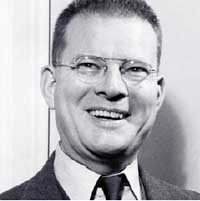
Dr. W. Edwards Deming, 1951

The latest newsletter from the W. Edwards Deming Institute [new link since the old link was broken] includes the photo of Dr. Deming from 1951 and: Some notes on management in a hospital by W. Edwards Deming, Ph.D.:

Fifteen hours elapse between dinner and breakfast. I was hungry in the middle of the night, first night. Fortunately had candy bars on hand. I have learned how to acquire and store up food like a squirrel if I get hungry during the night.

Dr. Deming had a sense of humor (the smile in the picture is quite different from the photos I normally see).

A physician cannot change the system. A head nurse cannot change the system. Meanwhile, who would know? To work harder will not solve the problem. The nurses couldn’t work any harder.

I will attend the W. Edwards Deming Institute Fall Conference in Washington DC, October 14th and 15th – send me a note if you plan on attending.

Related: PBS Documentary: How Hospitals Heal ThemselvesDestroyed by Best Effortsblog posts on Deming’s management ideas

Posted in Deming, Health care, Management | Tagged , , , | Comments Off on Thoughts on Hospital Management by Deming